
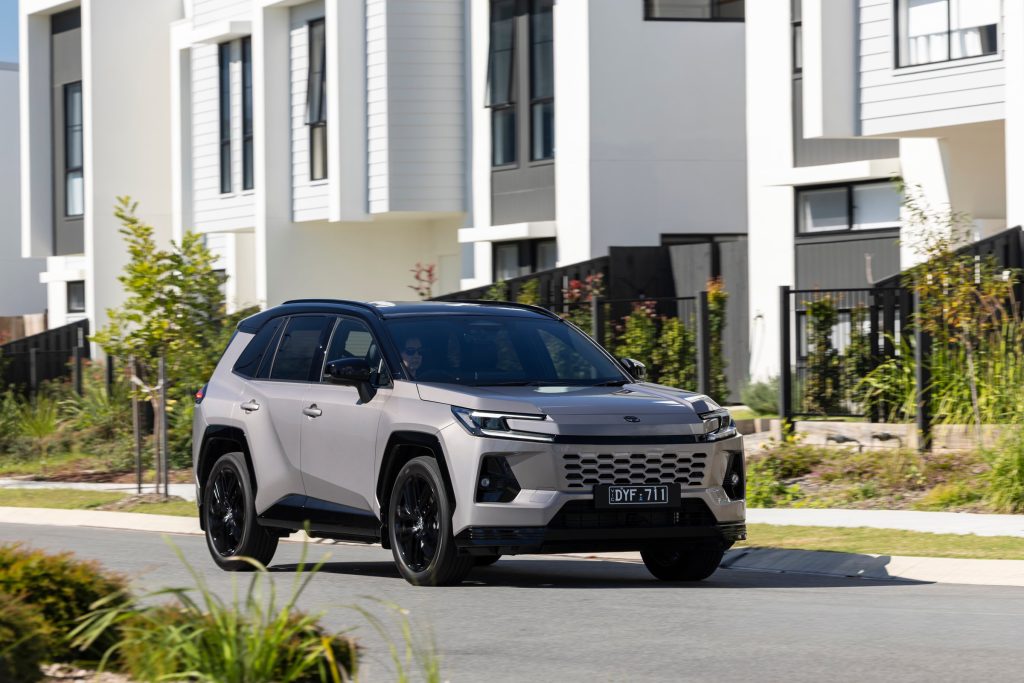
Toyota’s first RAV4 plug-in hybrid for Australia is already on sale, not merely a future model announcement. The sixth-generation SUV launched here in XSE 2WD, XSE AWD and GR Sport AWD forms. For a buyer weighing up the XSE, the important questions are what the advertised price includes, how far it can travel on a charge under the stated test, and whether the car’s charging hardware fits the way it will be used.
According to Toyota Australia’s 2026 RAV4 PHEV press kit, the XSE 2WD has a manufacturer’s recommended retail price of $58,840, while XSE AWD is $63,340. The flagship GR Sport AWD is $66,340. These are not drive-away prices: on-road costs are extra. Toyota’s Australian range announcement also lists a mandatory $675 premium-paint charge for XSE, on top of those figures. Ask for an itemised local quote before comparing it with another manufacturer’s drive-away offer.
Battery, charging and electric range
Both XSE versions use a 22.7kWh lithium-ion battery. Toyota specifies up to 11kW AC charging through a Type 2 connector and up to 50kW DC charging through CCS2. Its indicative figures are approximately 2.5 hours for a full AC recharge and 28 minutes to reach 80% on DC, subject to charger, battery and environmental conditions. An 11kW AC capability is not a promise that every home socket will deliver that power; the available electrical supply and charging equipment set the real limit.
For electric-only driving, Toyota quotes up to 154km for XSE 2WD and 144km for AWD on Australia’s NEDC laboratory test. That is a comparative test result, not a guarantee for a commute. The press kit also gives lower WLTP figures based on a European test and notes that the Australian model had not been tested under WLTP for that release. Do not mix the two cycles in a side-by-side comparison or treat either as a measured Australian real-world range.
What changes between 2WD and AWD?
The XSE 2WD pairs a 2.5-litre petrol engine with a front electric motor for a maximum combined output of 201kW in Toyota’s launch press kit. AWD adds a rear motor, taking the quoted combined output to 227kW for XSE AWD and GR Sport AWD. Those are combined system outputs, not the sum of each component’s individual maximum. Both powertrains can run in EV, automatic EV/hybrid and hybrid modes.
Inside the XSE
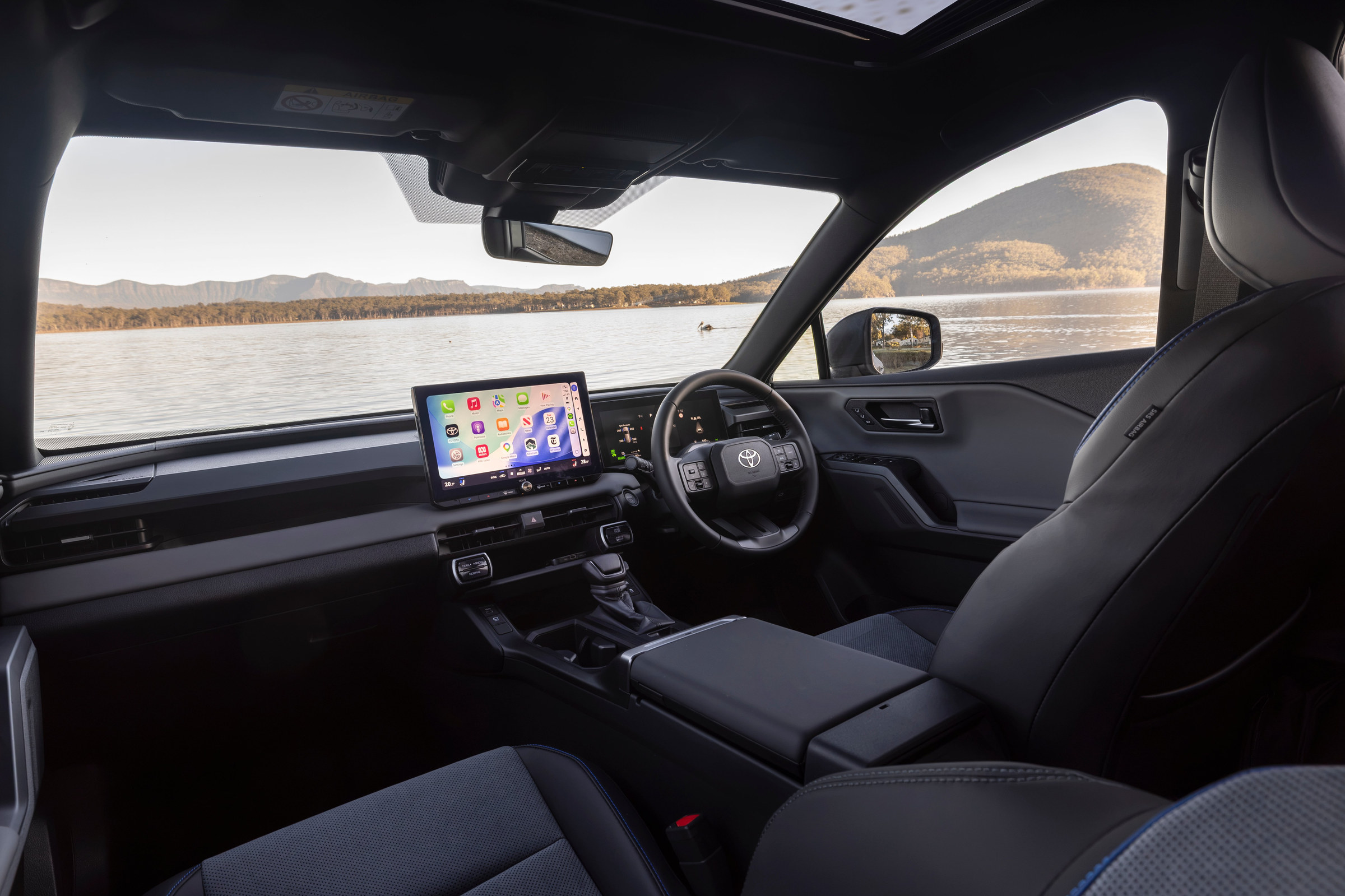
The PHEV XSE largely follows the XSE hybrid’s equipment, but Toyota identifies larger brake discs, water-repellent front side glass and a 1500W AC outlet in the luggage area among the PHEV differences. The outlet is a useful feature for small appliances, though the rating and any restrictions still need to be observed. This is a specifications and pricing explainer based on Toyota’s published material, not a road test; EVnews has not driven the vehicle or measured its charging or fuel use.
Is another grade coming?
Yes. In a September 2026 announcement, Toyota said a GXL 2WD PHEV would join the range in the first quarter of 2027. It shares the front-drive PHEV powertrain but is a different grade from the XSE shown in this article’s Toyota press photographs. Toyota had not given a GXL PHEV price in that announcement, so it should not be assumed to cost any particular amount below the XSE.
For a buyer who can charge regularly, the RAV4 PHEV’s appeal on paper is the ability to make some trips on battery power while retaining a petrol engine for longer journeys. Whether it makes financial sense depends on the actual drive-away quote, charging access, electricity and fuel costs, and how often the battery is charged. Those numbers need to be modelled for the driver’s own use rather than inferred from a laboratory range figure.